Lin-Kernighan-Helsgaun meta-heuristic example
The meta-heuristic used is K. Helsgaun’s LKH-3, an extension to LKH-2.
Helsgaun, An Extension of the Lin-Kernighan-Helsgaun TSP Solver for Constrained Traveling Salesman and Vehicle Routing Problems. Technical Report, Roskilde University, 2017.
Notes:
OptiWindNet interfaces with the LKH solver through temporary files and system calls to the
LKHexecutable, which must be in the PATH environment variable as seen from the Python code.Keld Helsgaun distributes his implementation (for academic and non-commercial use) as C source code and as a Windows binary at http://akira.ruc.dk/~keld/research/LKH-3/.
OptiWindNet’s LKH wrapper can only handle single-substation locations at the moment
LKH can only produce radial topologies. Since a radial topology is a special case of the branched topology, solutions produced by this method can be used to warm-start both branched- and radial-topology models.
If a routeset is desired, use PathFinder.
[1]:
from optiwindnet.importer import load_repository
from optiwindnet.svg import svgplot
from optiwindnet.baselines.lkh import lkh3
from optiwindnet.mesh import make_planar_embedding
from optiwindnet.pathfinding import PathFinder
from optiwindnet.interarraylib import G_from_S, as_normalized
Load Greater Gabbard Inner
[2]:
locations = load_repository()
[3]:
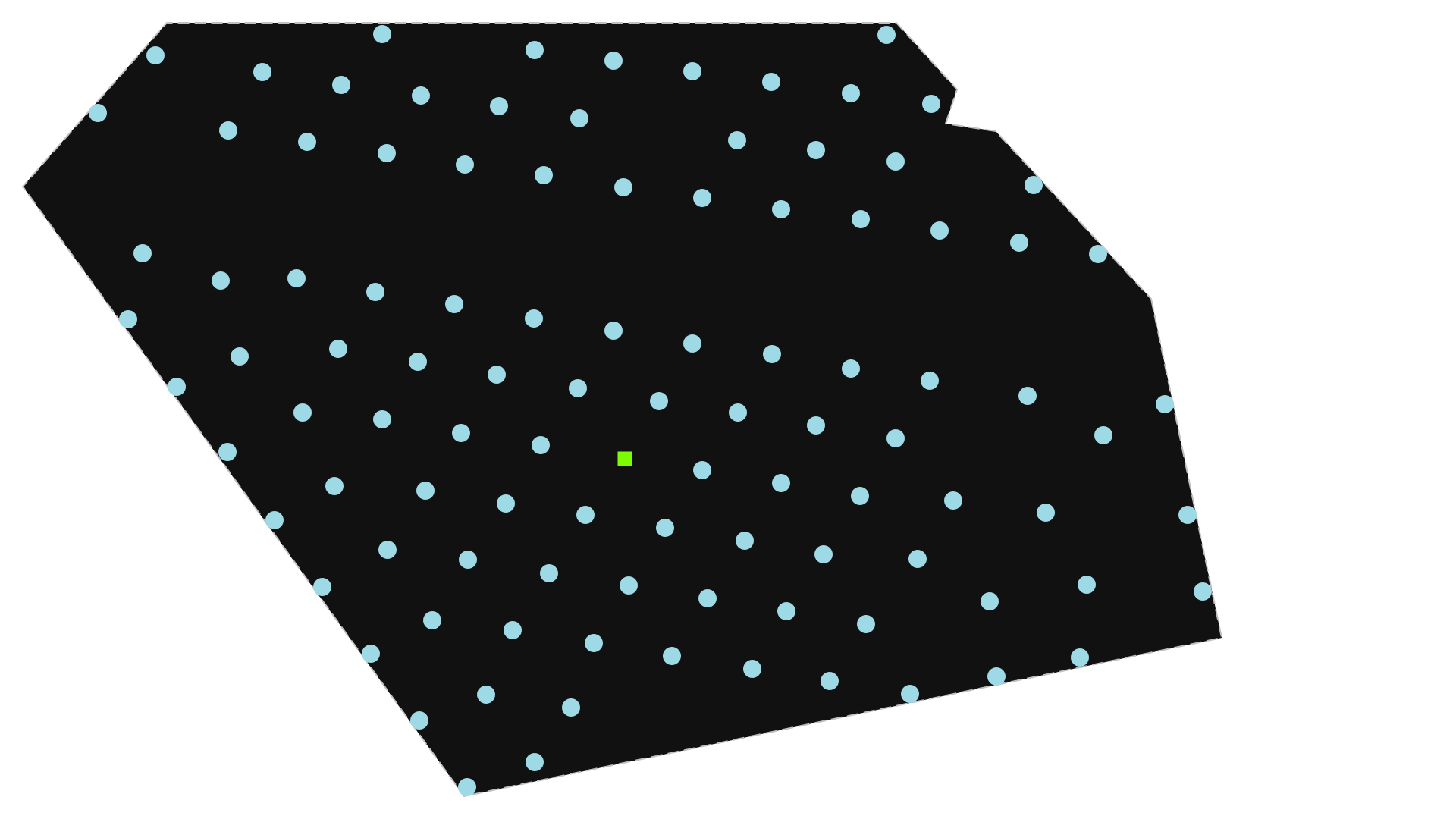
L = locations.gabbin
svgplot(L)
[3]:
Optimize Greater Gabbard Inner
[4]:
P, A = make_planar_embedding(L)
S = lkh3(as_normalized(A), capacity=7, time_limit=2)
print(S.graph['solution_time'])
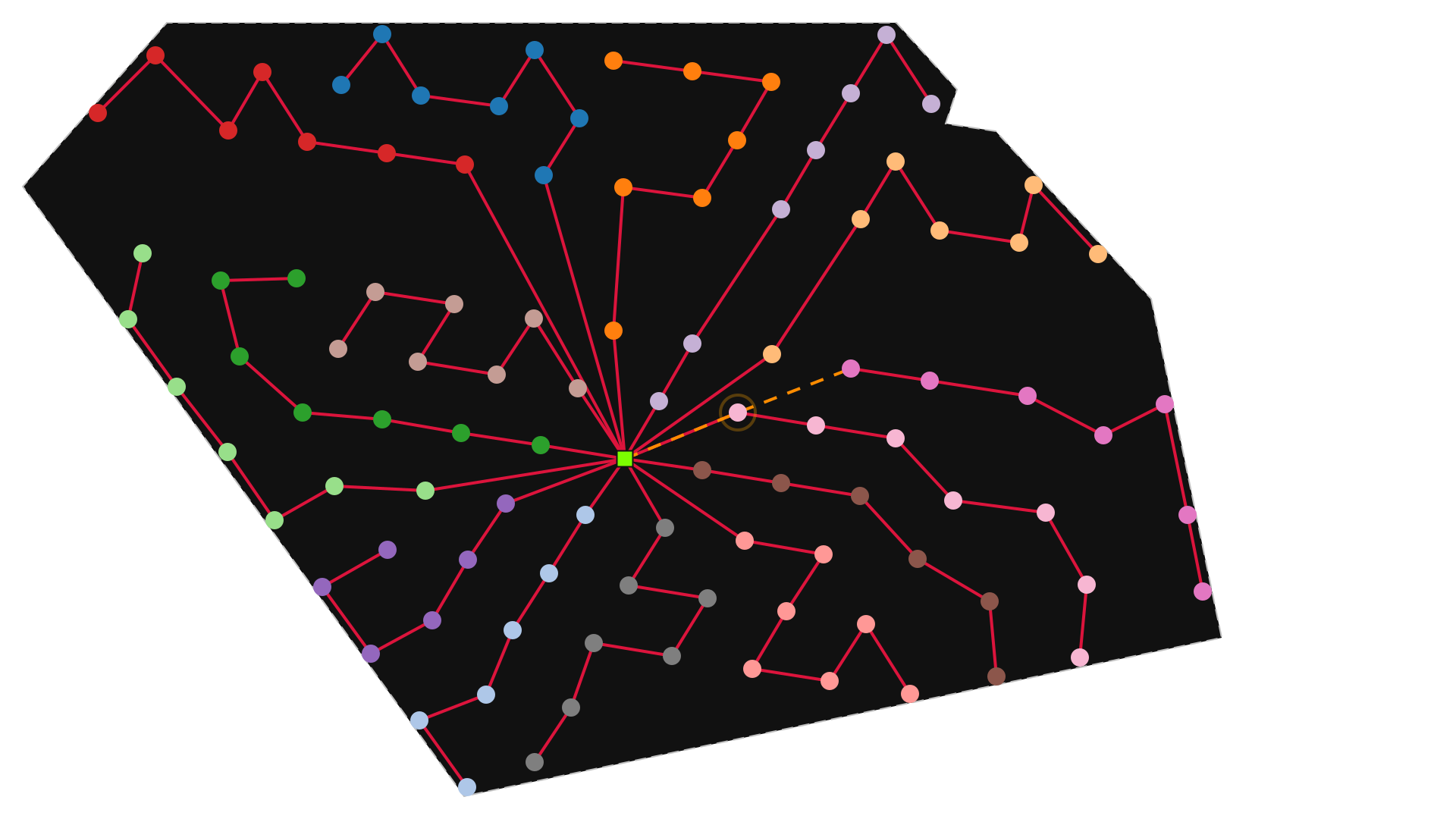
G = G_from_S(S, A)
svgplot(G)
0.71
[4]:
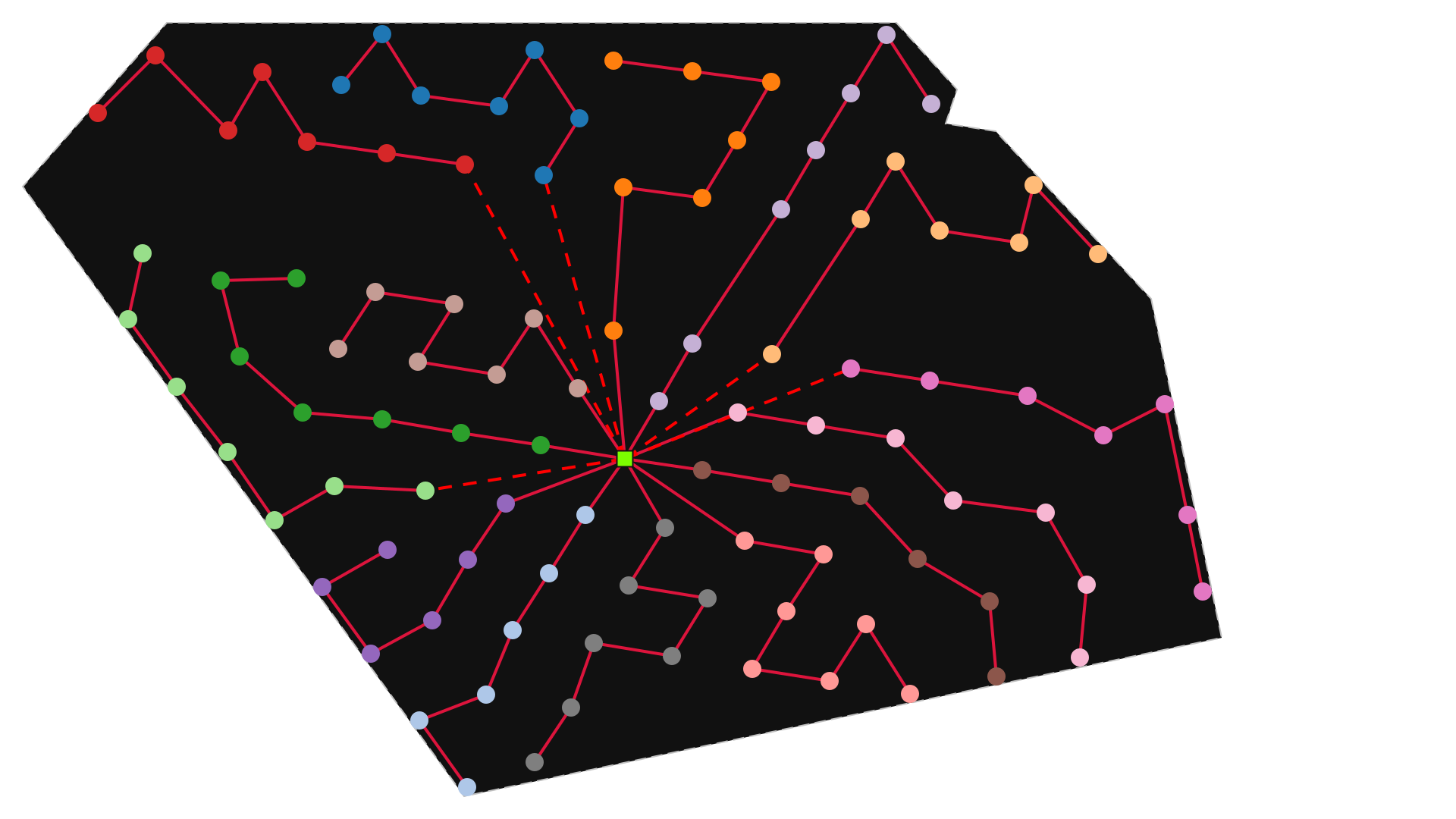
Route the feeders so as to avoid crossings
[5]:
H = PathFinder(G, P, A).create_detours()
svgplot(H)
[5]: