

Lin-Kernighan-Helsgaun meta-heuristic example
The meta-heuristic used is K. Helsgaun’s LKH-3, an extension to LKH-2.
Helsgaun, An Extension of the Lin-Kernighan-Helsgaun TSP Solver for Constrained Traveling Salesman and Vehicle Routing Problems. Technical Report, Roskilde University, 2017.
Notes:
OptiWindNet interfaces with the LKH solver through temporary files and system calls to the
LKHexecutable, which must be in the PATH environment variable as seen from the Python code.Keld Helsgaun distributes his implementation (for academic and non-commercial use) as C source code and as a Windows binary at http://akira.ruc.dk/~keld/research/LKH-3/.
The wrapper supports multiple substations by clustering terminals and solving one LKH instance per root.
LKH-3 can produce both radial (default Open-CVRP) and ringed (ringed=True CVRP) topologies. Solutions produced by this method can be used directly or as warm-starts for MILP models.
If a routeset is desired, use PathFinder.
[1]:
from optiwindnet.importer import load_repository
from optiwindnet.svg import svgplot
from optiwindnet.baselines.lkh import lkh3
from optiwindnet.mesh import make_planar_embedding
from optiwindnet.pathfinding import PathFinder
from optiwindnet.interarraylib import G_from_S, as_normalized
Load Greater Gabbard Inner
[2]:
locations = load_repository()
[3]:
L = locations.gabbin
svgplot(L)
[3]:
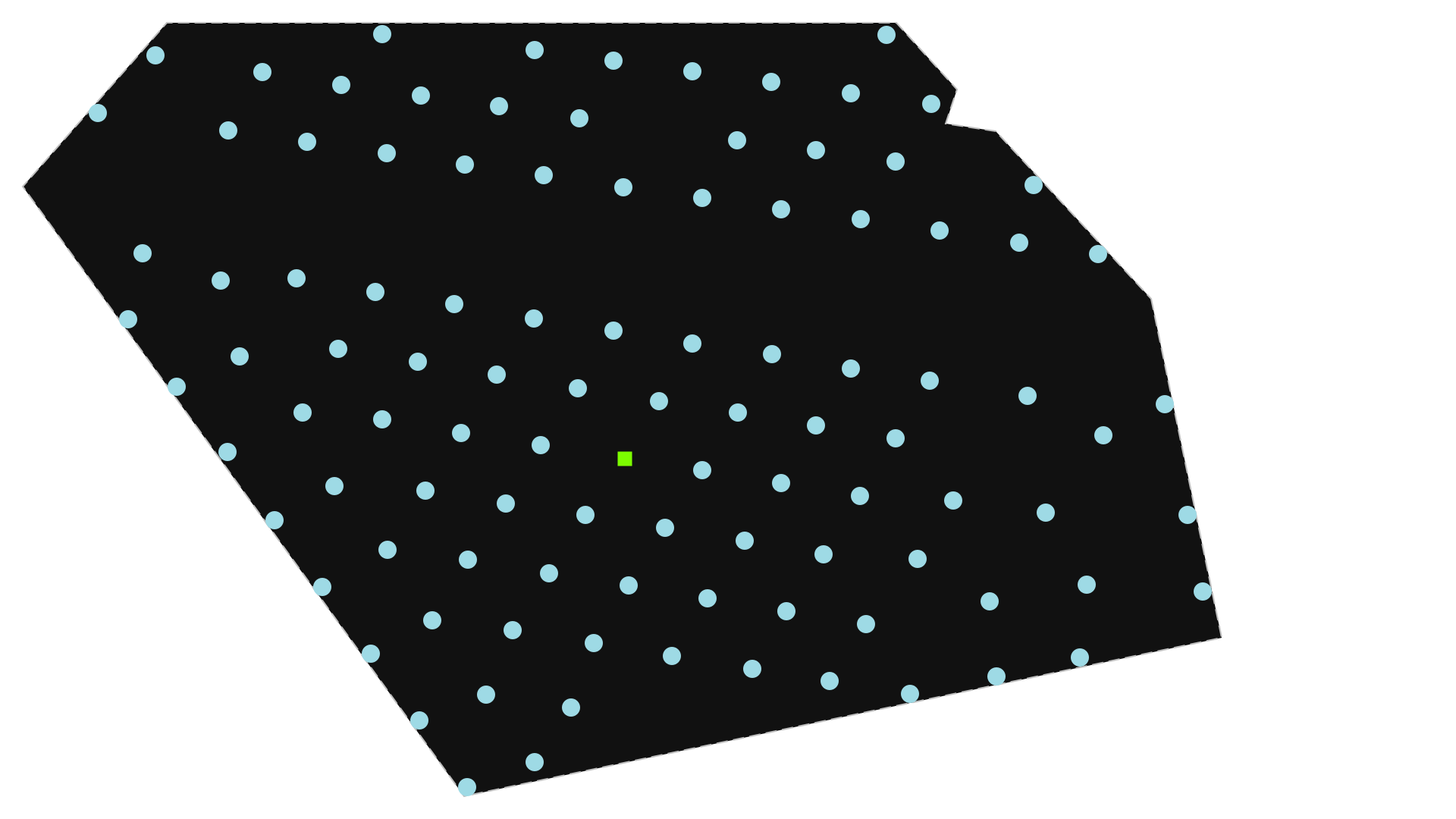
Optimize Greater Gabbard Inner
[4]:
P, A = make_planar_embedding(L)
S = lkh3(as_normalized(A), capacity=7, time_limit=2)
print(S.graph['solution_time'])
G = G_from_S(S, A)
svgplot(G)
0.87
[4]:
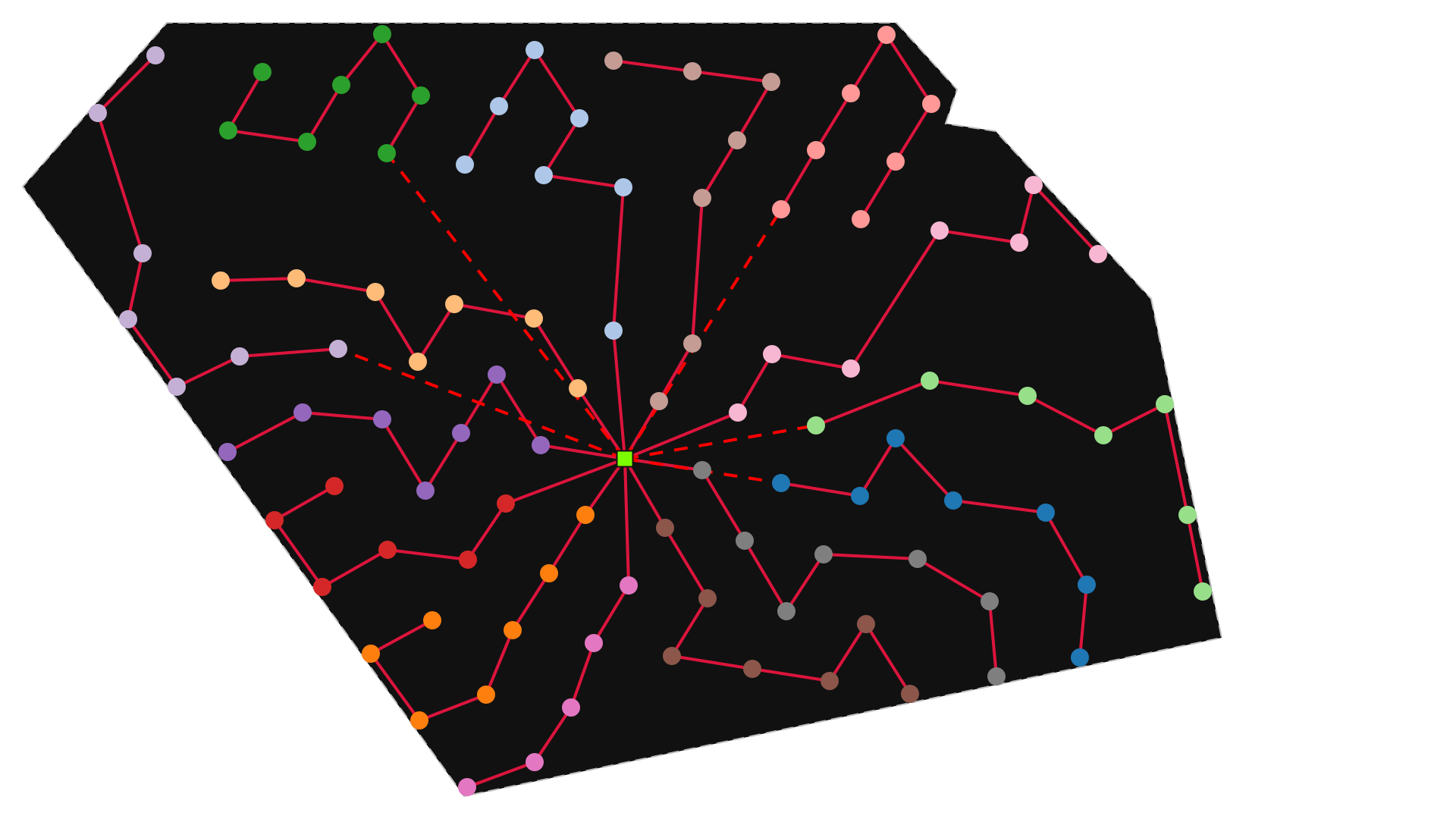
Route the feeders so as to avoid crossings
[5]:
H = PathFinder(G, P, A).create_detours()
svgplot(H)
[5]:
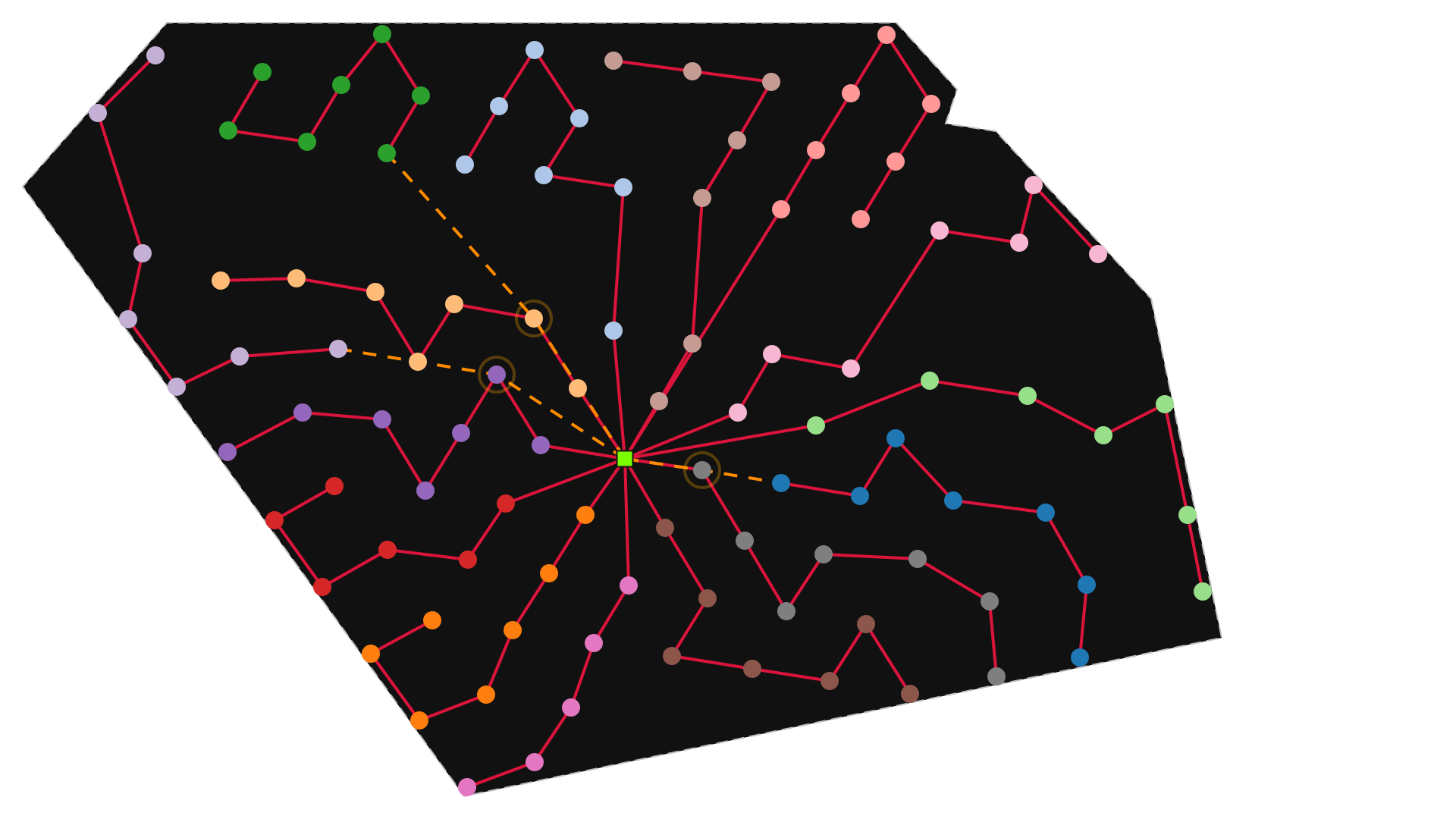
Current LKH options
warmstart supplies initial tours derived from a feasible topology. complete=True fills missing candidate links with direct Euclidean links; leave it false to restrict the solve to the allowed graph. runs and per_run_limit are passed to LKH-3, and seed controls its pseudo-random seed. The wrapper repairs crossings iteratively by default; as with HGS, that repair work can make wall time exceed the per-run limit.
LKH returns an electrical topology. Convert it with G_from_S() and route it with PathFinder when a physical routeset is needed.