SCIP example
[1]:
from optiwindnet.importer import load_repository
from optiwindnet.svg import svgplot
from optiwindnet.mesh import make_planar_embedding
from optiwindnet.interarraylib import G_from_S
from optiwindnet.heuristics import EW_presolver
from optiwindnet.MILP import solver_factory, ModelOptions
Initialize Sheringham Shoal
[2]:
locations = load_repository()
[3]:
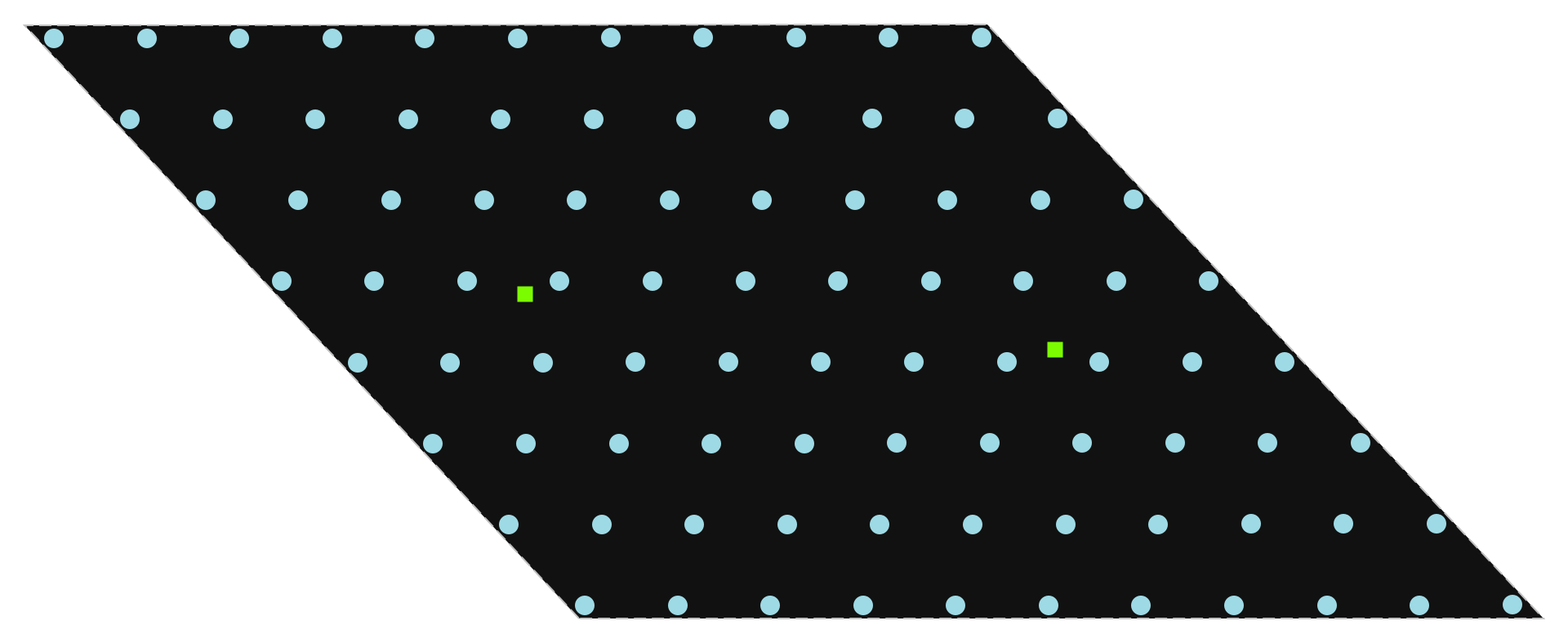
L = locations.sheringham
capacity = 6
[4]:
svgplot(L)
[4]:
[5]:
solver = solver_factory('scip')
Optimize Sheringham Shoal
[6]:
P, A = make_planar_embedding(L)
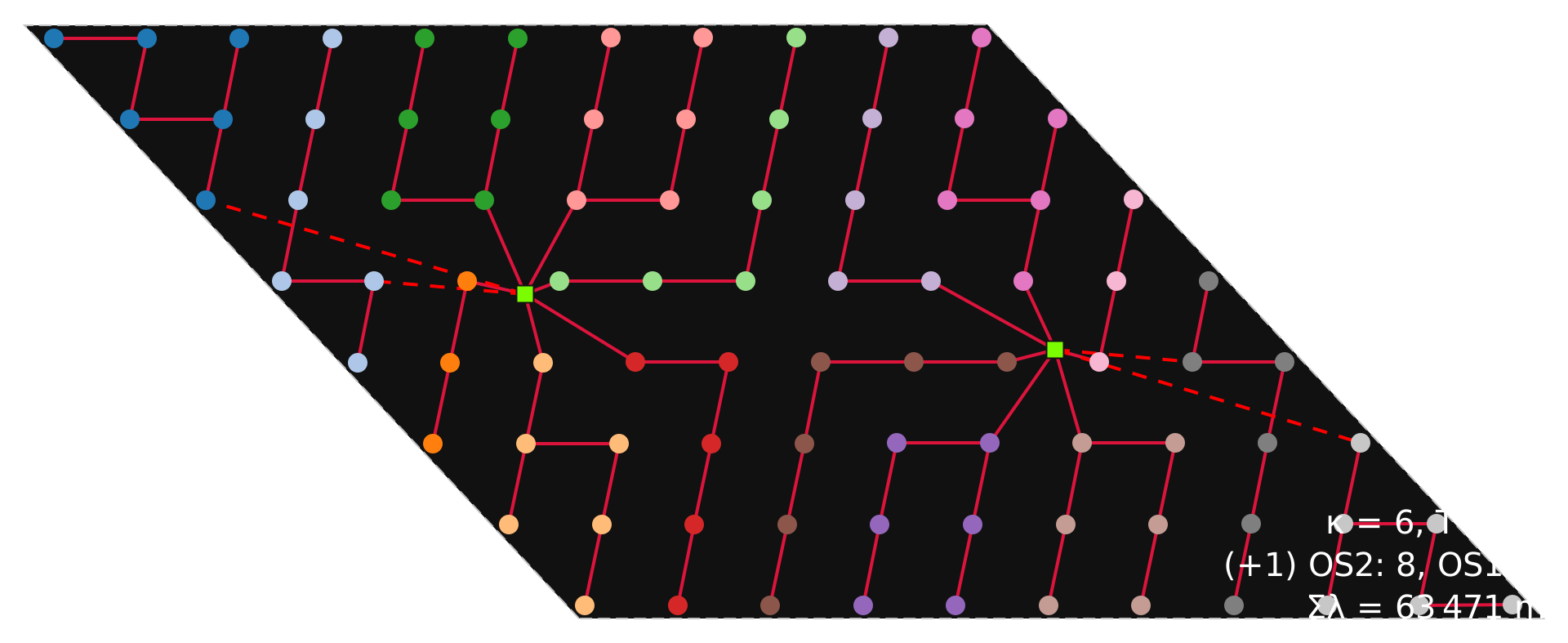
Initial heuristic solution to warm-start the solver:
[7]:
Sʹ = EW_presolver(A, capacity=capacity)
Gʹ = G_from_S(Sʹ, A)
svgplot(Gʹ)
[7]:
[8]:
solver = solver_factory('scip')
If SCIP was compiled with multi-threading capability, multiple concurrent solver instances are started. OptiWindNet’s default options prioritize launching feasibility-focused instances, but the choice of emphasis can be tuned by setting different weights.
The maximum number of concurrent threads can be set with option 'parallel/maxnthreads'. SCIP’s concurrent solver uses min(8, cpu_count()) by default, but it may decide to use a lower number to limit RAM usage.
[9]:
solver.options
[9]:
{'concurrent/scip-feas/prefprio': 0.6,
 'concurrent/scip/prefprio': 0.3,
 'concurrent/scip-cpsolver/prefprio': 0,
 'concurrent/scip-easycip/prefprio': 0,
 'concurrent/scip-opti/prefprio': 0}
The latest SCIP Optimization Suite precompiled packages include multi-threading, but the PySCIPOpt wheel must be built on top of the library distributed in that package (see instructions). Latest versions at the time of writing: SCIP 10.0.0, PySCIPOpt 6.0. The conda-forge pyscipopt was at version 5.6.0 and was not concurrency-enabled for all platforms at the time (check latest
version).
[10]:
solver.set_problem(
    P, A,
    capacity=Sʹ.graph['capacity'],
    model_options=ModelOptions(
        topology="branched",
        feeder_route="segmented",
        feeder_limit="unlimited",
    ),
    warmstart=Sʹ,
)
[11]:
solver.solve(
    mip_gap=0.005,
    time_limit=60,
)
[11]:
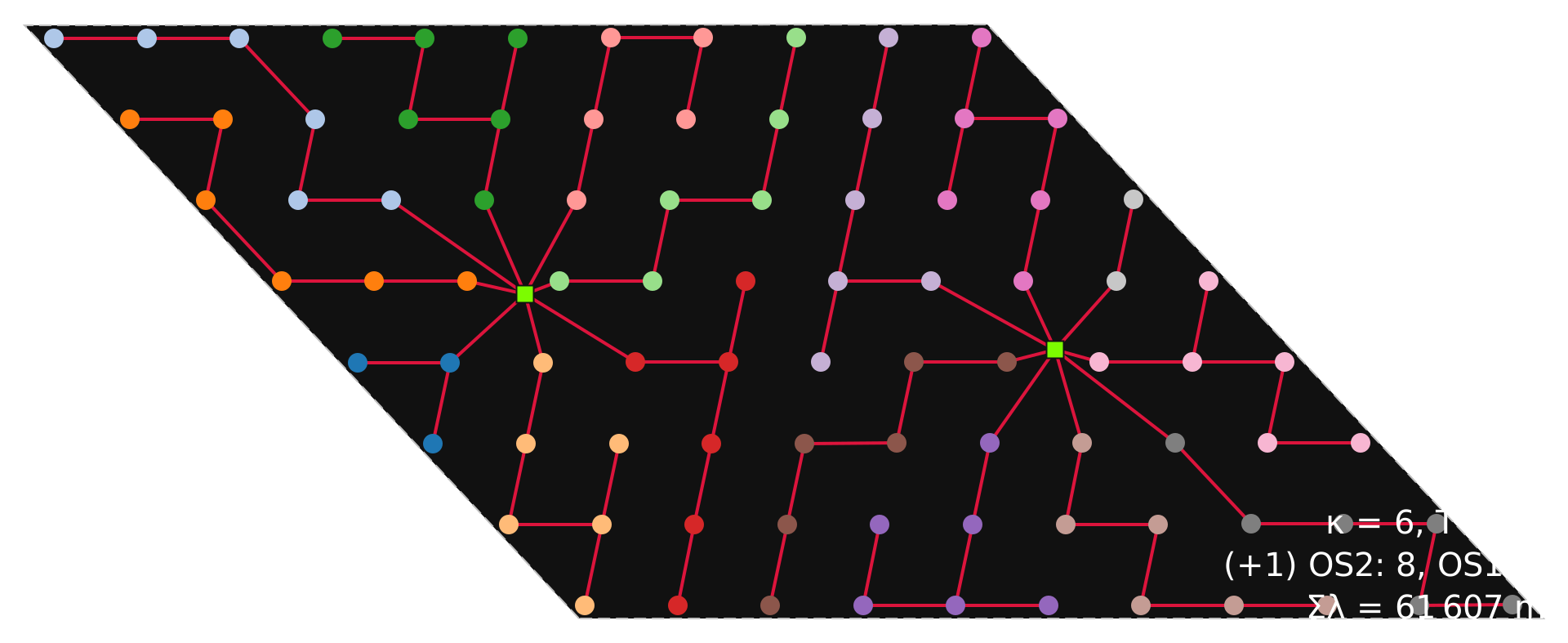
SolutionInfo(runtime=60.0, bound=60371.990294157695, objective=61606.94944045488, relgap=0.020045776613088373, termination='timelimit')
Note: If SCIP lacks multi-threading capability, a warning will be displayed and it will fall back to the single-threaded solver. The warning about the lack of concurrent capability looks like this:
.../optiwindnet/MILP/scip.py:96: UserWarning: SCIP was compiled without task processing interface. Parallel solve not possible - using optimize() instead of solveConcurrent()
  model.solveConcurrent()
[12]:
S, G = solver.get_solution()
svgplot(G)
[12]: